Culture
Only 37% of Companies Use Artificial Intelligence in Human Resources Processes
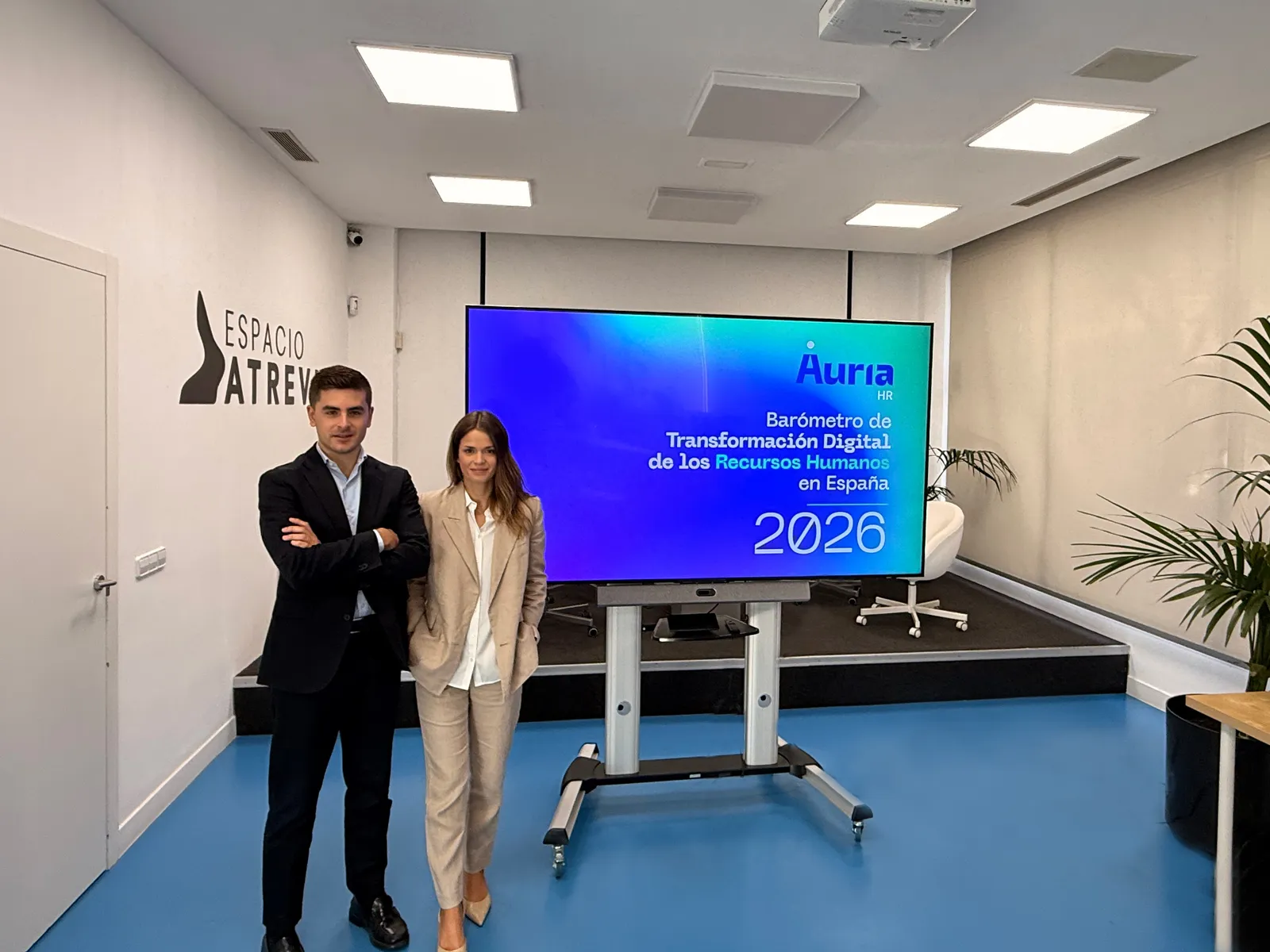
Only 37% of companies use Artificial Intelligence in Human Resources processes, and 83% admit they have not yet reached an optimal level of digitalisation. These are some of the findings of the HR Digital Transformation Barometer in Spain 2026 (Barómetro de Transformación Digital de los RR.HH. en España 2026), a study based on a survey of 427 companies and more than 20 in-depth interviews with HR professionals, covering the whole of Spain and 9 key sectors.
Key figures
- Only 37% of companies use Artificial Intelligence in HR processes.
- 83% admit they have not yet reached an optimal level of digitalisation.
- Just 17.8% of HR departments make decisions fully based on data.
- 47.3% cite lack of time as the main barrier to moving forward with digital transformation.
AI is gaining ground, but unevenly
AI adoption is concentrated mainly in areas such as recruitment and selection or training and development, where the gains in agility are most immediate. However, its structured integration into HR departments is still in its early stages.
Confidence levels also vary with experience: they reach 3.29 out of 5 among companies that already use AI, compared with 2.49 among those that have not yet adopted it.
This gap is compounded by the still limited use of data in decision-making: although companies have made progress in digitalising their most operational processes, technology is not yet fully embedded as a tool to analyse, anticipate and guide HR decisions.
"Lack of time is currently one of the main obstacles to advancing HR digitalisation, even ahead of a lack of budget. Yet there is a paradox: we need to digitalise precisely to free up time from operational tasks and devote it to more strategic work. The key is for technology to help simplify processes rather than be seen as an extra burden," explains Carla Segovia, Operations Manager at Auria HR.
Digitalisation is advancing on the operational side, but not the strategic one
Time tracking is the most digitalised HR process, with 90% of companies already covering it, followed by payroll (76%) and absence management (70%). Adoption is lower, however, in areas such as onboarding (44%), performance reviews (42%), workplace climate surveys (34%) and dashboards (26%).
The report also shows that 11% of companies still do not use any dedicated HR tool, which highlights the room there is to make simple, integrated digital solutions more accessible, especially for organisations with small teams and little capacity to take on lengthy implementation projects.
"HR digitalisation is moving at two speeds. We have made progress in automating operational processes, but we still need to carry that momentum into the areas that help us better understand people and turn that knowledge into strategic decisions. In a context of high turnover and candidate shortages, the challenge is to extend digitalisation to the processes that allow us to manage talent better, anticipate its needs and improve the employee experience," says Ángel Pidal, CEO of Grupo Nortempo and founder of Auria HR.
Priorities for the coming year
Looking ahead to next year, 60% of companies name the automation of administrative tasks as their top priority, followed by data analysis (31%) and improving the employee experience (29%).
In short
The challenge —and the opportunity— for HR departments lies in moving from digitalising to comply to digitalising to measure, anticipate and decide, bringing together technology, data and AI with clear criteria and with change management that ensures real impact on processes.
Download the full report: HR Digital Transformation Barometer in Spain 2026, free, in PDF.